Monday, 27 February 2012

Sandspit - A Community Abounding in Recreational Opportunities!

Photo Credit: www.sandspitbc.ca/

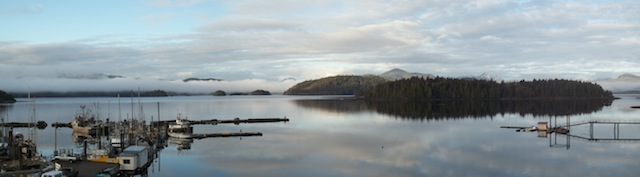
Sandspit (population 402) is a small hamlet situated on the northeast tip of Moresby Island, 14 km (9 mi) east of Alliford Bay and is the only community on Moresby Island.

Photo credit: www.bceh.com/

The community was appropriately named as it lies in the midst of a lengthy ‘spit’ of land jutting out into the open waters of Hecate Strait.


Sandspit has a rich history taking its roots from Haida culture, farming and pioneer life, canneries and logging.
Photo credit: North Pacific Seaplanes
Sandspit's first major industry in 1910 was a dogfish oilery, followed by a fish cannery in 1913. Today, the primary industries are transportation, logging and tourism.

 Photo credit: North Pacific Seaplanes


Sandspit services include a visitor centre, various accommodations, a grocery and liquor store, restaurants, laundromat, taxi, car rentals, outdoor equipment rental and sales, a marina and various charter operations (boating, kayaking, fishing, sightseeing).

Photo credit: North Pacific Seaplanes
Getting to Sandspit

This community is the arrival point for Air Canada flights to Haida Gwaii and has a large (by local standards) airport and a Visitor Centre.
Photo Credit: www.sandspitbc.ca/

Other travel options include travelling via BC Ferries.

Sandspit is ‘connected’ to Graham Island by a small vehicle ferry which runs between Alliford Bay and Skidegate Landing.

Sandspit is the ‘starting point’ for those wanting to visit the Gwaii Haanas National Park Reserve and Haida Heritage Site and Marine Protected Area Reserve, however, departure is by air or water, since there are no roads to Gwaii Haanas.

Recreational Opportunities

Plenty of outdoor recreational opportunities are available in Sandspit and the surrounding area including kayaking, fishing, hiking, camping and hunting.

We have tried to capture the highlights of these opportunities for you. Please also see the Sandspit community, the Queen Charlotte Visitor Centre and Go Haida Gwaii webpages for more information.

Kayaking 


Kayaking is a great way to explore the natural world of Haida Gwaii. Sandspit, being the closest community to Gwaii Haanas National Park Reserve, is a natural starting point for trips to that area. There are also some great areas to paddle closer to Sandspit.

  • Day Trips
For a relaxing day of paddling, try launching at Alliford Bay (where the ferry from Graham Island comes across) and paddling amongst the many small islands of Skidegate Inlet. This area is protected from harsh weather, and provides opportunities for exploring small islands, viewing the ancient Haida site of Haina on Maude Island and watching for seals, porpoises and birds.

Another option is to take your kayak to Moresby Camp, south of Sandspit, and base-camp there while exploring the bays and beaches nearby. A nice day trip is to the old logging site at Aero Camp, just east of Moresby Camp. You can also kayak near Gray Bay campground, although this area is more exposed and is sometimes more appropriate for kayak surfing than relaxed paddling.

  • Multi-day trips
Not surprisingly, most people who plan a multi-day kayaking adventure on the islands think first of visiting Gwaii Haanas. This amazing park reserve certainly offers some great areas for kayaking, and guided tours are available, as well as rentals and transportation for kayakers and their boats (see our Jan 9, 2012 Blog ‘The Gwaii Haanas Experience’).

If you are planning to kayak Gwaii Haanas, you will want to plan your trip well in advance and give yourself at least a week to enjoy the area. Guided tours to the area often book up months in advance.

For those who don't have the time or budget to visit Gwaii Haanas, another great option is to paddle around Louise Island. This island, the third largest in the archipelago, is tucked up against the side of Moresby Island south of Sandspit and just north of Gwaii Haanas. A trip around Louise Island, beginning and ending at Moresby Camp, takes about 5 days. Highlights include the Haida village site of Skedans with its standing totem poles, the graveyard at the old mission site of New Kloo, and the old moss-covered remains of logging camps at Aero Camp and Mathers Creek (adjecent to New Kloo).

Another option is to paddle through Skidegate Narrows to the west coast of the islands. A popular goal is the ancient Haida site of Chaatl, located on Chaatl Island and accessible through the protected waters of Armentiers Channel. Keep in mind that the channel at Armentiers is only passable at a high tide, although it is always possible to portage across the dry areas. This route allows you to see the wild west side of the islands without having to paddle through exposed areas. The unprotected areas of the west coast are only appropriate for highly experienced and adventurous kayakers.

  • Whalewatching! 
 
 Photo Credit: www.sandspitbc.ca/
If you are interested in seeing whales, the best time to visit is spring and early summer. In May and June, humpback whales migrate through Hecate Strait, and are a common sight on any tour to the south of Sandspit.

Dolphins are also most common at this time of year, although they are unpredictable and can be seen year round.

Photo Credit: www.sandspitbc.ca/

The spring also brings gray whales into Skidegate Inlet where they feed off Onward Point and near Skidegate. Killer whales or Orcas may be spotted at any time of year, and sometimes pass by near Sandspit. Seals are a common sight, and larger sea lions congregate on rocky islets on the more exposed coastlines.
Ocean Fishing

The waters around Haida Gwaii (the Queen Charlotte Islands) are known for world class fishing. The best area for ocean fishing is on the west coast of the islands. Huge spring (chinook) salmon, coho salmon, and ground fish such as halibut are targeted by sports fishers from around the world.

Sandspit, located at the eastern end of Skidegate Channel, is a perfect base for day-tripping to the west coast. As a result, Sandspit is home to some excellent guiding businesses, as well as a modern marina, fuel services, and a tackle shop.
River Fishing

Sandspit is also a great base for river fishing in the many creeks on north Moresby Island. Fly and tackle fishermen target the coho, chum and pink salmon that return to the streams every fall. In the winter months, steelhead can be caught as well (although they are catch and release only). Many of the great river fishing spots on Moresby Island are accessible by road from Sandspit, and accommodations are readily available in the fall, when most tourism slows down.

Hiking
Photo Credit: www.sandspitbc.ca/
The Sandspit area has a good selection of hiking trails and routes for outdoor enthusiasts of all ages and fitness levels. Camping gear is available for rent or sale at Moresby Exlporers. Some trails wind through tall old growth forest, while others follow shorelines and still others climb to mountain tops.

Following are some of the more popular hikes found in the Sandspit area:


  • Onward Point

The 10-15 minute walk around the Onward Point trail is favourite with Sandspit families. The looped trail leads from a parking lot between Alliford Bay and Sandspit out onto a rocky point with a gazebo. This is the best area to look for gray whales in the spring, as they like to feed just off this point. The trail winds through picturesque forest, and is easy to follow.

  • Dover Trail

The trailhead for this hike is on the west end of Sandspit, very close to the marina. The highlights of this trail are the pristine old-growth forest and the rich plant life along the banks of Haans Creek, where salmon spawn in the fall. The Dover Trail is within the Damaxyaa Conservancy.
The Spit

The route around the tip of the sand spit that gives the town its name is probably the most popular trail with locals, since it is within an easy walk of most homes in Sandspit. This is also one of the best areas on the islands for bird watching.

  • Cumshewa Head Trail
The trail from Gray Bay to Cumshewa Head is a multi-day hike suitable for experienced and fit hikers only.
The rocky, exposed coastline of Cumshewa Head makes for breathtaking scenery, but can be difficult to hike. The trail is within the bounds of Kunxalas Conservancy, and those who make it all the way to Cumshewa Head will find themselves at the beautiful, sheltered cove of Kunahalas, an ancient Haida camp-site where traces of the remains of a long-house are still visible.

Camping
Photo Credit: www.sandspitbc.ca/
  • Gray Bay Rec Site

A favourite recreation site for locals and visitors alike is the campground at Gray Bay. This site is about 45 minutes drive south of Sandspit along the Copper Bay Main gravel road. The turnoff to Gray Bay is well marked.

Gray Bay is a 5 km crescent-shaped beach open to the Hecate Stait to the east. The fine sand beach is great for walking, flying kites, beachcombing, kayak surfing, and accessing various hiking trails. Gray Bay has nine multi-party campsites well spaced along the curve of the beach. It is located in Kunxalas Conservancy.

  • Sheldon's Bay Rec Site 
If you like the look of Gray Bay but want even more privacy, check out Sheldon's Bay, a small, little-used campground located 3 km from Gray Bay and also within Kunxalas Conservancy. This site is accessed by turning off near Gray Bay on a rough gravel road. The flat grassy area around the interesting salt lagoon at Sheldon's Bay was used for grazing cattle by early settlers, and remains of the fence are still visible today.


  • Moresby Camp
This rec site is about 1 hour drive from Sandspit. It can be reached by following the main gravel roads from Alliford Bay or Sandspit (these two routes join to form a loop road) and turning off onto the Moresby Main, which ends at Moresby Camp. It is the most southerly point on the islands that visitors can access by vehicle. Moresby Camp was once a large logging camp, but the buildings and equipment are long gone. They have been replaced by a handful of gravel campsites, a large parking area, a day-use shelter, and a modern cement boat launch. Be aware that there is no fresh water available at the campground.

Moresby Camp is the starting point for many tours to Gwaii Haanas National Park Reserve, and is also a great place to launch a small boat or kayak to explore the area and catch some fish or prawns. It is very safe to leave your vehicle parked at Moresby Camp while out on the water.

Hunting


The north Moresby Island area is great for hunting, using Sandspit as a base or camping at any of the area's rec sites. The most common target species is Sitka Blacktail Deer, a smaller subspecies of blacktail (or mule) deer. This species was introduced to the islands around the turn of the century, and is now extremely overpopulated due to the lack of natural predators.

Although the deer here are small, they also lack the gamey taste of larger mainland deer, making them a popular meat with locals and visiting hunters. The bag limit is high on the islands due to the negative impact of the deer on native plant species and forest regeneration.

Much of the forest around the Sandspit area is second-growth of various ages, including many recent cuts. This makes for perfect deer hunting territory, which can be accessed by the area's many gravel roads. This is a good area for a family hunting trip, since you can return to town every evening and the chance of seeing deer each day is high.

For more information, check out the Hunting and Trapping Regulations Synopsis.


Sandspit is a warm and friendly community abounding in recreational opportunities! Come visit!


Monday, 20 February 2012

Haida Heritage Centre Kaay Llnagaay ("Sea Lion Town")


 Photo Credit: Haida Heritage Centre
 Photo Credit: Haida Heritage Centre


The Haida Heritage Centre at K'aay Llnagaay (Sea Lion Town) in Skidegate, is an award winning cultural heritage centre in a 53,000 square foot cedar multi-complex consisting of five contemporary monumental timber longhouses. It was officially opened to the public in August 2008.


 Photo Credit: Haida Heritage Centre

The Heritage Centre houses the expanded Haida Gwaii Museum (see also http://haidagwaiitourism.blogspot.com/2012/01/haida-gwaii-museums.html), meeting rooms/classrooms, the Performing House, Canoe House, Bill Reid Teaching Centre, the Carving Shed and a gift shop.


Photo Credit: Photos Canada.com


The Centre is comprised of six connecting traditional Haida longhouses each fronted by a traditional totem pole.

 Photo Credit: Haida Heritage Centre


The longhouses are named for the purpose they serve such as the ‘Greeting House’ where visitors are welcomed. The Haida Gwaii Museum exhibits can be found in other longhouses such as the ‘Greenhouse Atrium’, ‘Saving Things House’, ‘Contact and Conflict’, ‘Keeping our Way of Life’, ‘Forest, Connections’ and ‘Cycles/Natural History’. The restaurant/cafĂ© is located in the ‘Eating House’.

 Photo Credit: Haida Heritage Centre


Knowledgeable staff provide tours of the centre including some of the thirteen totem poles at Kaay Llnagaay, throughout the summer months, The guides provide insight into some of the crests and stories displayed on the poles.


 Photo Credit: Haida Heritage Centre

Traditional Haida cedar canoes are on display yielding an even greater appreciation of the Haida culture. The exhibits include Bill Reid's renowned 50 foot long canoe, the 'Loo Taas', which is housed in the Carving Shed.


 Photo Credit: Haida Heritage Centre

Popular attractions at the Heritage Centre include the Haida Gwaii Museum, the carving shed and traditional Haida canoe tours of the inlet.

 Photo Credit: Haida Heritage Centre


Other popular tours include that of learning from Haida weavers. The weavers demonstrate their craft from the processing of cedar bark and spruce root to the art of weaving.


 Photo Credit: Haida Heritage Centre

You will want to ensure that your visit to Haida Gwaii includes a day spent at the Haida Heritage Centre.


For more information, please call: (250) 559-7885

Website: http://www.haidaheritagecentre.com/home.html


Adult/Senior - $15
Student - $10
Children(6-12) - $5
Children(5 and under)- Free

SUMMER (June-August)
10am-6pm Daily

WINTER (September-May)
10am-5pm Tues-Sat

Monday, 13 February 2012

Haida Gwaii Semester – A Unique University Experience!


              Photo Credit: Haida Heritage Centre


                        Photo Credit: Haida Gwaii Higher Education Society

On the remote islands of Haida Gwaii, a unique opportunity for a ground-breaking educational experience exists. While the landscape is breathtaking and dynamic, the islands occupy a position on the leading edge of environmental conflict and resolution, reconciling First Nations' rights and title, and maintenance of a sustainable natural resource economy.

Photo Credit: Haida Gwaii Higher Education Society

The Haida Gwaii Higher Education Society, a non-profit organization, was established in 2008 with the vision of providing world-class university-level educational opportunities inspired by the people, communities and environments of Haida Gwaii. It provides exposure to higher education locally and highlights the value of local knowledge, experience and tradition. It also creates a significant economic impact upon the local economy.


Photo Credit: Haida Gwaii Higher Education Society

In 2009, the society, in partnership with Simon Fraser University, developed a pilot project comprised of a 3-week graduate-level field course in ‘Resource and Environmental Management’.


Photo Credit: Haida Gwaii Higher Education Society

The project was a huge success and evolved into the ‘Haida Gwaii Semester’ which currently provides senior undergraduate courses in Natural Resource Management. The 2012 semester has representation from ten universities across Canada, two international students, and one local student. Since its inception, eight local students have completed the program.

Photo Credit: Haida Gwaii Higher Education Society

The Haida Gwaii semester experience (Jan-April) includes attending lectures at the world-class Haida Heritage Centre, touring forests and resource-based operations, spending time with local knowledge holders and local experts in natural resources in the resource-dependent communities.

Photo Credit: Haida Gwaii Higher Education Society

Students have expressed appreciation for the ability to experience, firsthand, the application of their university lecture material, and the value of traditional knowledge, as it is applied on Haida Gwaii. The program provides the opportunity for interaction with fallers, Haida carvers, forestry professionals, archeologists and the President of the Council of the Haida Nation, among many others.


Photo Credits: Haida Gwaii Higher Education Society

Consider this unique university experience!

For more information contact (250) 559-7885 (Ext 230) or http://www.haidagwaiisemester.com/haida-gwaii-semester/

Monday, 6 February 2012

Why I love Masset


By Joyce Hayden

“Masset Inlet, is I think the most beautiful spot I have ever seen, and on this account and
because of its superior climate, the town of Masset should succeed as a residential town alone.”

So said S.A.G. Finch in a report to the directors of the Fishing Syndicate of British Columbia. The report was quoted in a 1914 brochure on the Queen Charlottes, put out by a British company hoping to outfit immigrants to the islands.

Many people agreed, and made Masset their home. I’m one of them. How about you?

Photo Credit: Ian Gould
Have you ever stood on the shore of Masset Inlet and watched the trollers go out on the tide, or felt the wind in your face as you walked along Ops Beach? Or sat quietly on a driftwood log and watched waves pound in? Or filled your pockets with agates, as you wandered along Agate Beach? Or dug for clams beyond Tow Hill, then spent three days cleaning and canning what it took two hours to dig?


Photo Credit: Ian Gould
And have you felt the gentle island mist on your  upturned face, or walked the streets of Masset in a raging storm, soaked to the bone and chilled through, yet filled with exultation. Or perhaps you’ve simply sat in the sun and watched the daffodils grow? If you have, you’re likely hooked. Like me.

Photo Credit: Ian Gould

Photo Credit: Ian Gould

It’s lovely to live where the air is sweet and clean, where it’s washed each day by the rain, then dried in the wind. Where the geese fly by, honking out their daily schedule.

Photo Credit: Ian Gould
        
And I like to be able to walk from one end of town to the other, day or night. And to read the big bulletin boards at Masset Grocery, the Credit Union and the Co-op. They seem to chart the life of the village.

Photo Credit: Ian Gould
        
And an interesting life it is. We’re such a varied lot. There is always someone interesting to talk to. Someone of different background, with different viewpoints, ideas and opinions. No cookie-cutter community this. It’s more like a good seafood stew, sharp and tangy, with a little of everything tossed in. Makes for lots of flavour, but it takes awhile to break through the shells. Once through, it’s delightful.


         Photo Credit: Ian Gould
And it has ever been thus. Masset’s history is fascinating. Have you ever heard of Dutch Annie, who retired on the Charlottes and built a big house in Delkatla? Or about the Udall II, once a missionary boat, then a
fishing troller, then finally sold to someone who seemed more interested in its oven than its fishing gear? Now its remains rest peacefully on the east coast where it began so many years ago. And did you know there was once a gold smelter in Masset? And that Cookie the cow had a calf named Biscuit?
        
 Someone called it the land beyond the rainbow. I can’t think of a more fitting description.
        
Sure, I get lonely. Sometimes I miss the stores, and the hordes of people. Then I remember the pollution, and high heels. That’s what I left behind. Pollution, high heels and rush, rush, rush.
        
Why would I want to go back? I don’t know. Do you?
           
The stories go on and on and on. And I love them. And I
love Masset.

Photo Credit: Ian Gould
           
Joyce Hayden was The Haida Gwaii Observer’s Masset
columnist during the 1980s.

Monday, 30 January 2012

Haida Gwaii Museums

Photo Credit: Haida Heritage Centre
Haida Gwaii Museum
Kaay Llnagaay ("Sea Lion Town") Second Beach Road, Skidegate

Ph: (250) 559-4643
E-mail: haidagwaiimuseum@skidegate.ca


The Haida Gwaii Museum is a non-profit organization with a 20 member board of directors representing all Haida Gwaii communities. The museum originally opened to the public in 1976 at Second Beach, Skidegate. In 2008, the newly renovated 17,000 sq ft expanded museum was opened, as part of the new 53,000 sq ft Haida Heritage Centre. The Haida Gwaii Museum primarily focuses on Haida history and contemporary culture in the form of art, objects, knowledge and documentation.

The museum's permanent 'Exhibit Houses' include Greenhouse Atrium, Eating House, Saving Things House, Contact and Conflict, Keeping our Way of Life, Forest, Connections and Cycles/Natural History.

In addition, The museum organizes an annual visual arts program of workshops and temporary artist exhibits; educational programs in conjunction with School District #50; and a series of public programs aimed at Haida Gwaii visitors during the visitor season (May to September).

Four to six temporary exhibitions representing the work of contemporary artists from Haida Gwaii as well as artists from BC, Canada and international destinations are organized each year.

Open daily in the summer with reduced hours during the winter. Admission is $15 for adults, $10 for students, $5 for children 6-12, and free for children under 6.


Port Clements Settlers Museum
45 Bayview Ave, Port Clements
Ph: (250) 557-4576 or (250) 557-4403
E-mail: pcmuseum@qcislands.net


Photo Credit: Port Clements Settlers Museum

The Settlers Museum in Port Clements is operated by the Port Clements Historical Society. The museum was built in 1985 to display items having historical value from early pioneers on Haida Gwaii. The focus of the Settlers Museum is upon the history of the European settlement and the forest industry on Haida Gwaii.

Photo Credit: Ian Gould

Displays include pioneer artifacts and historical photographs of logging camps, the flourishing forest industry and early 1900s life in Queenstown/Port Clements. An impressive outdoor exhibit of logging equipment invites the viewer to appreciate the work of early Haida Gwaii loggers.

The Golden Spruce and the ‘White Raven’ were popular attractions in Port Clements until 1997 at which time the Golden Spruce was illegally felled and the ‘White Raven’ met its demise when it made contact with an electrical transformer. The museum features both of these attractions in articles and photographs.

Open daily during the summer from 11am-4pm and on weekends during the winter. Admission is $2.


Dixon Entrance Maritime Museum
2182 Collinson Ave
Masset, V0T 1M0
Ph: (250) 626-6066


The Dixon Entrance Maritime Museum is appropriately located in an historical building – that being the original Masset hospital, built in 1914. The building has also served as a school house, a teacherage and an alternative school.

The Dixon Entrance Maritime Museum was organized with leadership from David Phillips and a group of dedicated volunteers. The museum opened to the public in 2001 and continues to operate as a non-profit organization.

The focus of the museum is upon Greater Massett’s maritime and settlement history. The museum features exhibits of Masset and Old Massett’s fishing fleets and shipbuilders as well as the numerous clam and crab canneries (Tow Hill, Naden Harbour, Old Masset, Lock Port and Queen Charlotte).

The museum captures the history of the thriving north end communities in a time of abundance and hardship.

The museum displays include photographs and documentation from the turn of the century featuring medical pioneers on Haida Gwaii, Union Steamships as the mode of transportation to Haida Gwaii, pioneer life and military history.

The museum also features local art exhibits throughout the year.

Open daily June - September (1-5pm) and weekends in April– June (2-4pm) . Admission is $2.

Monday, 23 January 2012

The Music Festival on Haida Gwaii 1975 - Present

By Janet Rigg 
 
In 1975, local musicians such as Percy Williams and Ron Souza, performed on the back of a pickup truck in Queen Charlotte City for anyone who would listen.

This was good. So they took it on the road, or should I say "boat" and one of the islands in Bear Skin Bay became the site for a joyous musical event. Again, this was good. So they did it again. Bob Bullechuk
The Community Club in Queen Charlotte became home to the first official Music Festival in 1978. The line up featured a wide range of local talent and relied on many volunteers to make it happen. Hazel McQuarrie was one such music lover who supported the festival and inspired musicians and fans to come. It was such a success that it became an annual event, until 1986 when many local musicians went to Vancouver for Expo 86 to perform. This caused a break, and there was no music festival until it was revived in 1995.

In 1995 the QCI Arts Council (now the Haida Gwaii Arts Council) sponsored the Juggernaut Jam Music Festival. Not only did this give local musicians a chance to perform to a large audience again, but organizers also began to bring in musicians from Canada and other parts of the world. This exposure to off-island talent, and the opportunity for local musicians to share ideas and be inspired by professional musicians, was a huge success. The Juggernaut Jam Music Festival continued in Charlotte until 1999, when it became known as the Edge of The World Music Festival, and moved to a large ocean-side field in a rural area of Tlell. Situated in the middle of the island, it made the festival more accessible to the island’s population.


The Edge of the World Music Festival became a not-for-profit society in 2000. Still volunteer run, it began to grow.

The festival [became] a highlight of the year for local islanders and continue[d] to entice more and more people to these remote islands. What’s the big draw?: A good small festival community feeling in a magical setting; World class musicians sharing our stage with promising emerging artists from the islands and around the world; Anyone who comes to these mystical islands leaves feeling refreshed and inspired.
Frank Wall


This singular musical event, in a field in Tlell, brought in such acts as: Spirit of the West, John Spearn, Los Gringos Salvajes, Pepi Danza, Sandy Scofield, Random Order, Mamaguroove, and Gary Comeau and the Voodoo Allstars.

The event was guided by the likes of Pat Carrie Smith, Skye Cantin, Bob Bullechuk, Debbie Pearson, Elizabeth Inkster, and Keith Alexander, among others such as Sabrina Frazier, Frank Wall, Toby Sanmiya, Sandra Beggs, Jeannie Kalamarz, Roly Thompson, and George and Donnette Farrel.


It was always a great success, however the weather was often an uninvited guest. After the large horseshoe tent over the stage nearly blew away in 2006, causing the Friday night show to be cancelled, the Festival was moved to a nicer weekend in August and the shelter of the Tlell Fall Fairgrounds.

2007 also saw the beginning of the Annual Lantern Parade. The only annual lantern parade in Northern BC, it was the creative vision of Joanne Hayward and Germain Vigneault. During the evening performances, locals who had made paper lanterns during the lantern workshops would parade through the dancing crowd. A magical moment, the parade continues to grow every year as more and more amazingly unique lanterns are made. Sadly 2011 saw the passing of Joanne Hayward from cancer, but the lantern parade goes on, carrying her light and her vision.


From 2007 to 2009, the blue and white striped horseshoe tent was still a fixture at the Edge of the World Music Festival, but it began to show its age, and the plywood stage that it sheltered began to show the strain of the weight of so many musicians having played on it. In 2010, Festival organizers decided to bring in a state of the art mobile stage unit. This unit allowed for better sound, better visibility, and better lighting. It also made for a more professional show, with many guest musicians suitably impressed by this set up.


Roeland Denooij has been the Artistic Director for the Festival since 2009. With a music degree from McGill University, Roeland’s ear has been able to pick out extremely high quality acts from the hundreds of submissions received every year.

Highlights include; The Shuffle Demons, Shane Philip, Dominque Fraissard, The Kerplunks, Wayne Lavallee, The Odds, and Kinnie Starr. However, he has never lost sight of the fact that the festival is also a time for local musicians to shine. Roeland tries his hardest to find time for every local musician to perform who applies.

 Also highlighted are the incredible Haida Dancers of Masset and Skidegate, who traditionally open and close each festival.


Each year the festival improves – with more cohesive ambiance, more food and merchandise vendors showcasing local wares and cuisine, more diverse workshops, and more fringe acts. There is now a new organizing committee in place, with a great selection of 30-somethings lending their creative talents to get this festival done.


Additionally a large number of local and off-island volunteers pitch in on the festival weekend, not to mention the local businesses that sponsor and support the festival.


 All of this effort comes together to make the Edge of the World Music Festival on Haida Gwaii unlike any other. You may even catch Percy Williams and Ron Souza, who still command attention on the stage.